ACL's framework that takes your AI agents from demo to real operation.
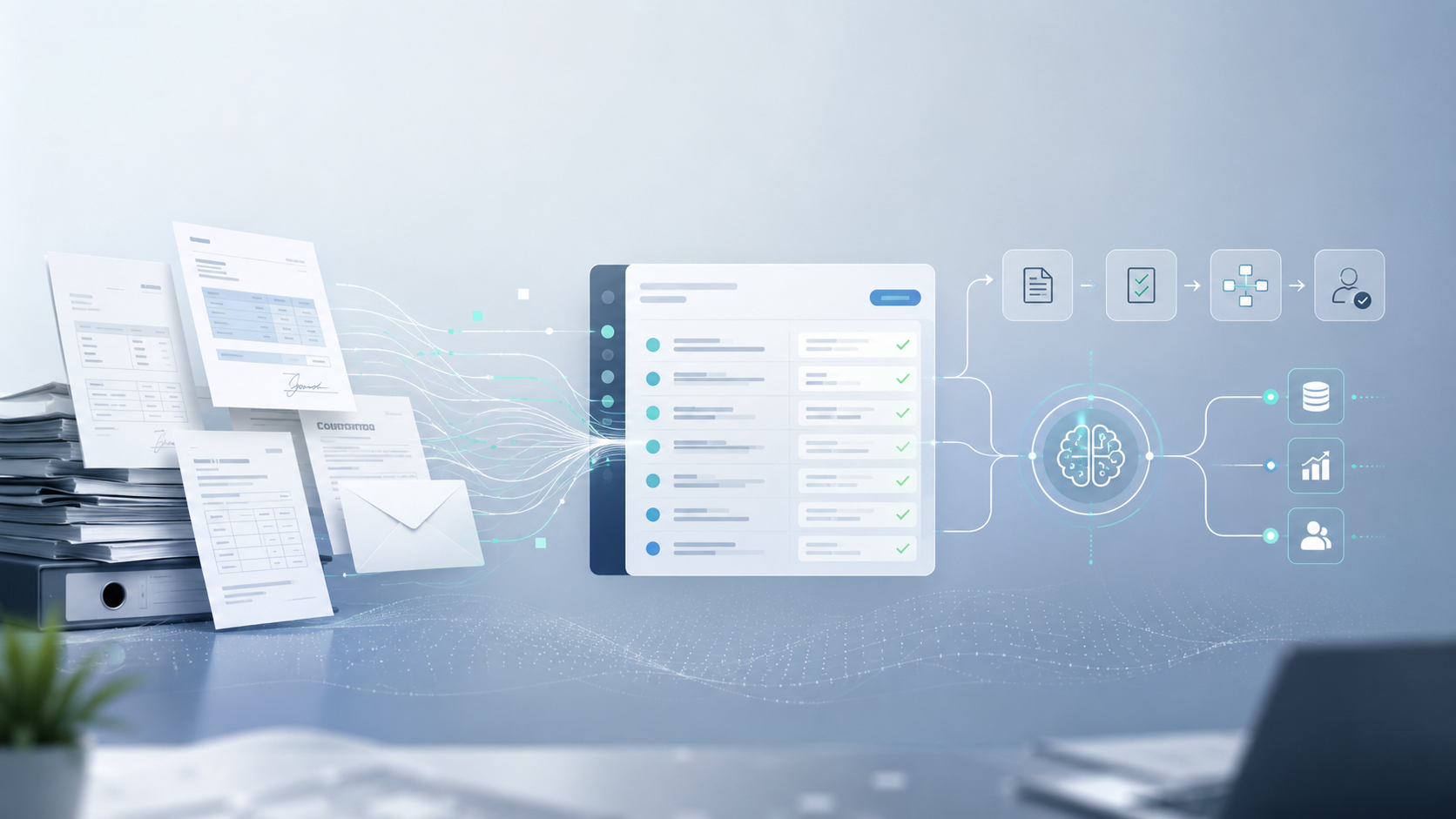
Building a prototype with AI is easy; keeping it in production is engineering. SPIREX® orchestrates the layer between your backend and the models —security, stability and performance— so that AI runs in the core of your business, not just in a demo.
Book a POCGoverned AI, integrated with your backend.
Disconnected tools, uncontrolled risk.
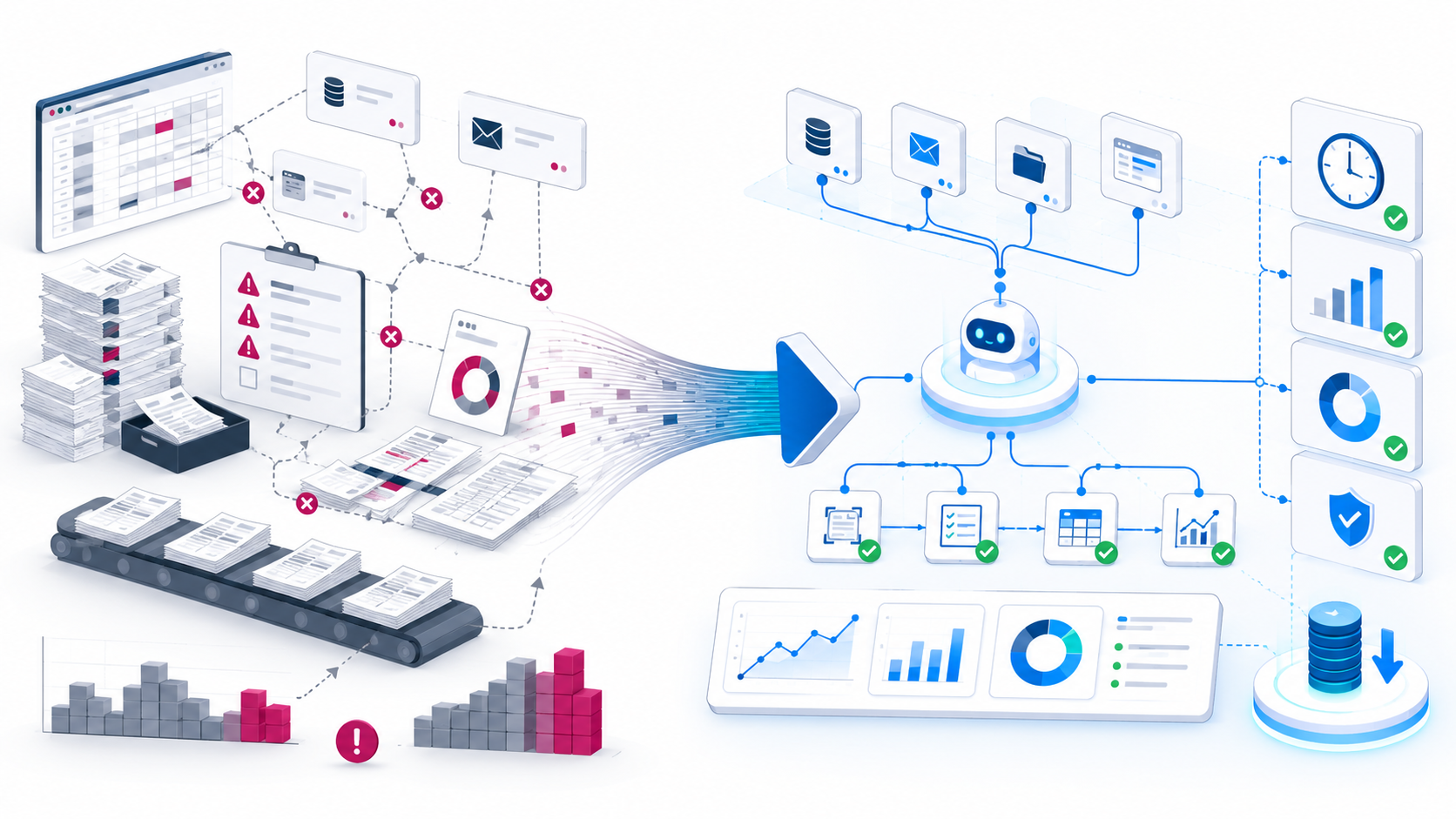
Connects multiple autonomous agents under a single deterministic flow, eliminating information silos and manual dependencies between teams.
Decisions are made with Human-in-the-Middle (HITM) on critical matters. Every system action is traceable, reversible and auditable.
Your data and models never leave your perimeter. Your operation's intellectual property stays under your jurisdiction, not that of an external provider.
The five pipeline phases are the software development lifecycle (SDLC) your team already knows: SPIREX® does not propose a new process, it is a faithful reflection of yours, with an accountable agent and a human gate at every stage. And because the pipelines are declarative, the flow is built from the stages, roles and approvals your organization already has.
Who decides
What the team gains
An enterprise agent is made of two complementary layers: what it knows and what it can do.
What the agent knows
skills.lock.What the agent can do
Every skill runs in isolation, every action is signed and all of your data stays in your tenant.
Each agent runs in an ephemeral container with restricted network and file system. No persistence between runs and no lateral access to other clients.
Jira, Figma, GitHub and database tokens are resolved at runtime from a secrets manager: they never appear in the model's context.
Prompts, contexts and outputs are processed in your contractual region, on private models with zero retention and no training on your data.
Every run records the skill, input and output hashes, human reviewer, timestamp and signature. Any decision can be reconstructed end to end.
Depending on the problem you are solving, the framework comes in as the way you execute or as an accelerator for development already under way.
“I need to take AI agents to production without losing traceability or control over who approved what.”
SPIREX® is the way you execute: an end-to-end agentic pipeline, human gates at every transition and auditable evidence for every decision. This is the conversation in regulated sectors, where speed alone is not enough to reach production.
Talk about governance“I have a development project with a committed date and I want to deliver sooner, without lowering the quality bar.”
SPIREX® comes in as an accelerator on a conventional project: your team keeps its process and its stack, and the framework adds speed, consistency and quality control over the code being produced.
Talk about timelinesActive deployments in industries where mistakes are not an option.
Measured with the same formulas your team already uses: a baseline in the sprint before the pilot, one concrete pain point and one agent, reviewed at the close of every sprint.
From a contained diagnosis to a closed-scope delivery, depending on how much you want to commit up front.
Before accelerating anything, SPIREX® maps the system you already have: living documentation and a dependency graph of your code, generated by the agents and validated by your team.
Our professionals join your team with SPIREX® already running on their workstation. They pick up tickets from your Jira, work to your standards and your sprint cadence, and report to your tech lead.
You define the outcome — a migration, a new module, a certification — and the ACL cell delivers it end to end with SPIREX®. Your team reviews at every gate; it does not execute.
No. SPIREX® is the infrastructure that governs them and securely connects them to your transactional systems. The gateway is multi-vendor —Anthropic, OpenAI, Gemini, DeepSeek, Mistral (EU), Groq/Llama and Copilot— with a failover chain between them. You arrive with your own models and contracts, and SPIREX® plugs in without asking you to migrate.
We design a Proof of Concept (POC) tailored to your technology stack. The cycle takes up to 4 weeks from kick-off to having agents running in production with measurable metrics.
No. SPIREX® is deployed as a container inside your own VPC: neither the code nor the data leaves your tenant. Private models (Vertex, Bedrock) run in your contractual region, with zero retention and no training on your data.
No. The pipelines are declarative: you describe the flow you already have —your stages, your roles and your approval points— and SPIREX® runs it as is, without touching code. That is why it is a faithful reflection of your development lifecycle, not someone else's process.
No, and they are best used together. A copilot helps one person inside their editor; SPIREX® governs the whole cycle —from requirement to deployment— and leaves auditable evidence of every step.
We'll schedule a free technical session to map your specific case.
Discover, Learn, Grow, Share